

Envolve Vision is a leader in exceptional, tailored vision benefits and services for Medicaid, Medicare and Marketplace member products. Every quarter we share key news that you can use to best serve your patients.
Double Billing: Avoid Duplicate Claims
As a reminder, submitting a claim for payment to both a health plan and Envolve Vision—also known as double billing—for the same vision service is not permitted and may be considered fraudulent. Envolve Vision monitors billing practices, and if duplicate claims are identified, the health plan and/or Envolve Vision may take corrective action, including termination of the provider’s Participating Provider Agreement.
Requirement Change: DEA License or CDS Certificate Required for Ophthalmologists
Effective June 1, 2026, all ophthalmologists (MD, DO) must have a current Drug Enforcement Administration (DEA) license and/or Controlled Dangerous Substance (CDS) certificate on their Council for Affordable Quality Healthcare (CAQH) profile, as applicable.
If a DEA license or CDS certificate is not available, providers must update their CAQH profile to include a written prescribing protocol or waiver.
Please note:
- Credentialing cannot be completed without one of these items on file.
- Providers who do not meet this requirement will not be eligible to render services.
To avoid delays or disruptions, ensure your CAQH profile is up to date with the required documentation.
Correct Coding Education: Comprehensive vs. Intermediate Eye Exam
Intermediate and comprehensive ophthalmological services are integrated services. This means:
- Medical decision-making cannot be separated from the examining techniques used.
- Individual exam components (e.g., slit lamp exam, keratometry, ophthalmoscopy, retinoscopy, tonometry, motor evaluation) should not be itemized or billed separately.
Comprehensive Eye Exams (92004, 92014)
Comprehensive ophthalmological services describe a general evaluation of the complete visual system.
- Always include initiation of a diagnostic and treatment program.
When to Use Intermediate Eye Exam Codes (92002, 92012)
Use intermediate exam codes when:
- Services are reported solely with refractive diagnoses, and
- There are no complicating comorbidities requiring initiation of a diagnostic or treatment program.
What Counts as “Initiation of a Diagnostic and Treatment Program”?
This includes:
- Prescribing medication
- Arranging for:
- Diagnostic or treatment services
- Consultations
- Laboratory procedures
- Radiological services
Additional Note
- Prescription of lenses, when required, is reported under 92015.
- This includes specification of lens type, power, axis, prism, absorptive factor, impact resistance, and other factors.
2026 Medicare Compliance Training
Thank you for participating with Envolve Vision’s Medicare Panel. Please disregard this article if you have received confirmation of training completion.
To comply with the Health Plans training requirements related to First Tier, Downstream, and Related Entities (FDR), all Medicare-contracted providers must attest each year that they have completed the Medicare Compliance Trainings for themselves and their staff.
The 2026 trainings launched on July 15, 2026. For convenience, the 2026 trainings and attestation are located online as they were in prior years. Please visit the envolvevision.com/attestation.html website to access the required documents.
After you review the Medicare trainings, please fill out and submit the attestation on the vision website. Then you will have successfully completed the training requirements. On the website, you will receive an instant confirmation that your attestation was submitted. You will also receive a confirmation email at the email address you provide.
FOR PROVIDER GROUPS, we have included an option to submit individual provider information within your group (up to six practitioners) into the vision website form. You only need to submit for one location, as the training is tracked at the individual provider NPI level. It is not necessary to submit multiple addresses for the same providers.
If you have questions, please email our Compliance Team at ebocompliancematters@centene.com.
What the Retina Can Reveal About Cardiovascular Health
 Retinal findings may offer important insight into a patient’s cardiovascular health. Several conditions identified during routine eye exams are associated with increased risk of stroke, myocardial infarction (MI), and other cardiovascular disease (CVD).
Central retinal artery occlusion (CRAO) is associated with significantly elevated risk of acute stroke, MI, and long-term cardiac conditions such as atrial fibrillation. Central retinal vein occlusion (CRVO) has also been linked to increased risk of stroke and MI. Cotton wool spots, often associated with diabetes and hypertension, are tied to higher risk of stroke- and heart-failure-related events. Additionally, patients with macular degeneration—particularly those with subretinal drusenoid deposits (SDD)—may have increased risk of ischemic stroke and MI.
Advances in imaging further highlight this connection. Findings such as a decreasing artery-to-vein ratio on fundus photography, reduced retinal or choroidal thickness on OCT, and changes in vessel density on OCTA have been associated with cardiovascular dysfunction. However, these biomarkers are nonspecific and require further validation before being used for routine screening or clinical decision-making.
Retinal findings can support a more comprehensive view of a patient’s health. When appropriate, consider discussing these findings with patients and encouraging follow-up with their primary care provider. These conversations can help patients better understand the connection between eye health and overall health and support timely evaluation of potential cardiovascular risk.
Always Check Member Eligibility
It is essential to review member eligibility before providing any services. This practice ensures that the services rendered are appropriately covered by the member’s health plan, reducing potential reimbursement issues and ensuring compliance with regulations. Maintaining an eligibility verification process helps both providers and members. You can verify eligibility online through Eye Health Manager or by calling Customer Service.
Stay Compliant: Avoid Common FWA Issues
Envolve Vision conducts regular audits and uses systems to analyze claims to identify possible Fraud, Waste and Abuse (FWA). If any FWA is detected, the Envolve Vision Special Investigation Unit will conduct a review that may result in actions against those who are found to have committed FWA. Actions may include:
- Provider education
- More rigorous Utilization Review requirements
- Recovery of monies previously paid
- Extrapolated overpayment calculation
- Reporting to appropriate payor and/or regulatory agencies (OIG)
- Termination from the Envolve Vision Network
The most common submissions of FWA:
- Unbundling of codes
- Upcoding
- Misrepresentation of services
- Claims for services not rendered
If you suspect another provider is inappropriately billing Envolve Vision or if a member is receiving unnecessary services, please contact Envolve Vision Fraud, Waste and Abuse hotline as indicated below. We take all reports of potential FWA seriously and investigate all reported issues.
Fraud, Waste and Abuse Hotline
- Envolve Vision Special Investigation Unit Email: CDVSIU@centene.com
- Envolve Vision FWA Hotline: 866-685-8664
- Report online at envolvevision.com/report
Improve the Health of Diabetic Members
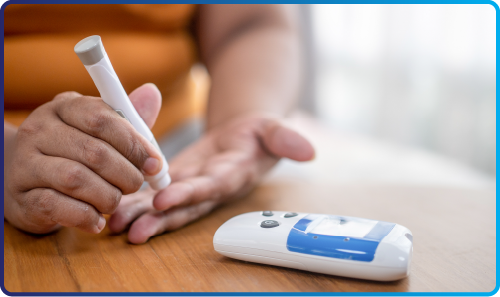 Help your patients with diabetes and reduce administrative burdens. Envolve Vision offers a dedicated HEDIS Training and Tips website to determine CPT II and other supplemental codes to use for diabetic retinal exams. Routine retinal evaluation is recommended to reduce the risk of diabetes-related blindness.
REMINDER: You may be eligible for a $10 CPT II reporting incentive. Please ensure your billing staff submits a billed rate of at least $10 to receive the maximum reimbursement for this incentive program. Review your fee schedule and remember to submit the appropriate CPT II codes referenced at HEDIS Training and Tips.
Is Your Practice Accessible?
To enhance the availability of healthcare services for individuals with disabilities, we invite you to participate in the Provider Accessibility Initiative (PAI) survey. It is vital that patients have the most accurate information about your practice’s accessibility.
Your involvement is particularly helpful to those patients who already struggle with many health care issues. According to the CDC, approximately 1 in 4 adults in the United States has a disability. Individuals with disabilities are more likely to:
- Have depression
- Struggle with obesity
- Have diabetes
- Smoke
- Have heart disease
Improving access to care for these at-risk patients is more important than ever. Please complete this short PAI survey to help make sure our members can find your practice when they need you most.
No Referral Needed
When scheduling eye exams for patients, referrals from primary care physicians (PCPs) are not required when seeing a participating optometrist or ophthalmologist.
Questions? Please contact Customer Service.
Vision Care by the Numbers
Envolve Vision Proudly Serves
 | 30 | STATES + PUERTO RICO |  | 26,000+ PROVIDERS |
 | 716,000 MEDICARE LIVES |  | 4.7M | MARKETPLACE LIVES |  | 10M MEDICAID LIVES |
*Data is current as of June 2026
About Us
A subsidiary of Centene for more than 30 years, Envolve Vision has partnered with vision care providers across the country to administer eye care programs that meet the needs of our members. You are among 26,000+ unique eye care providers, including independent providers and popular retail chains, within our network. Thank you for partnering with us to provide quality vision services to your patients.